For mission-driven organizations navigating the gap between culture and performance
Your team knows what's wrong. Your structure doesn't let them say it.
Individual growth without collective identity is insight with nowhere to land.
When leadership feels it but can't name it — and good teams still can't agree — I name it. Then I build the engine that changes it.
See If We're a Fit2–3 engagements per month, by design · Virtual & in person
When the gap is what's unsaid
The candor problem
Leadership feels the tension. Staff already know what's wrong. The real conversation is happening everywhere except the room where decisions get made. This is an empathy failure — the structure doesn't have a path for truth to travel.
When the gap is between functions
The translation problem
Two good teams — technical and programmatic, expert and non-expert, mission and operations — respect each other and still can't build shared standards. This is an accountability failure — no shared definition of done, no structure for decisions to hold.
Trusted by


The math your budget already knows
You're already paying for this. The question is whether you're getting anything for it.
Run the numbers on your last offsite: venue, travel, catering, production, and the fully loaded cost of every leader in the room for a full day. For a 130-person retreat, that's six figures before a single decision gets made.
Now the harder question: what did it actually resolve? If the honest answer is "we aligned" — and the same tension resurfaced within a quarter — you didn't buy an offsite. You bought a postponement.
Everything below is the evidence.
Why most culture work didn't work
Empathy became a workshop.
Accountability became someone else's job.
The last decade produced two separate industries: psychological safety programs that built empathy without giving it anywhere to go, and operational consulting that built accountability without asking whether anyone trusted the process enough to follow it.
Organizations bought both, separately, and got neither — because empathy without accountability is a feelings exercise, and accountability without empathy is a compliance exercise.
Most organizations have approached this at the individual level: what should you do differently? The Clarity Engine works at the system level — the structure, the dynamics, the leadership, the path that difficult information has to travel before someone with authority to act on it actually hears it.
One piece of it, free, right now: at your next leadership meeting, ask each person to name one thing the team should start saying out loud, one thing it should stop handling in side conversations, and one voice it should invite into the room that isn't there yet. That's the seed. What I build with your team is the full engine — but even the seed will show you where your structure is failing.
In practice — when the gap is what's unsaid
130 staff. One session.
It shaped the entire week.
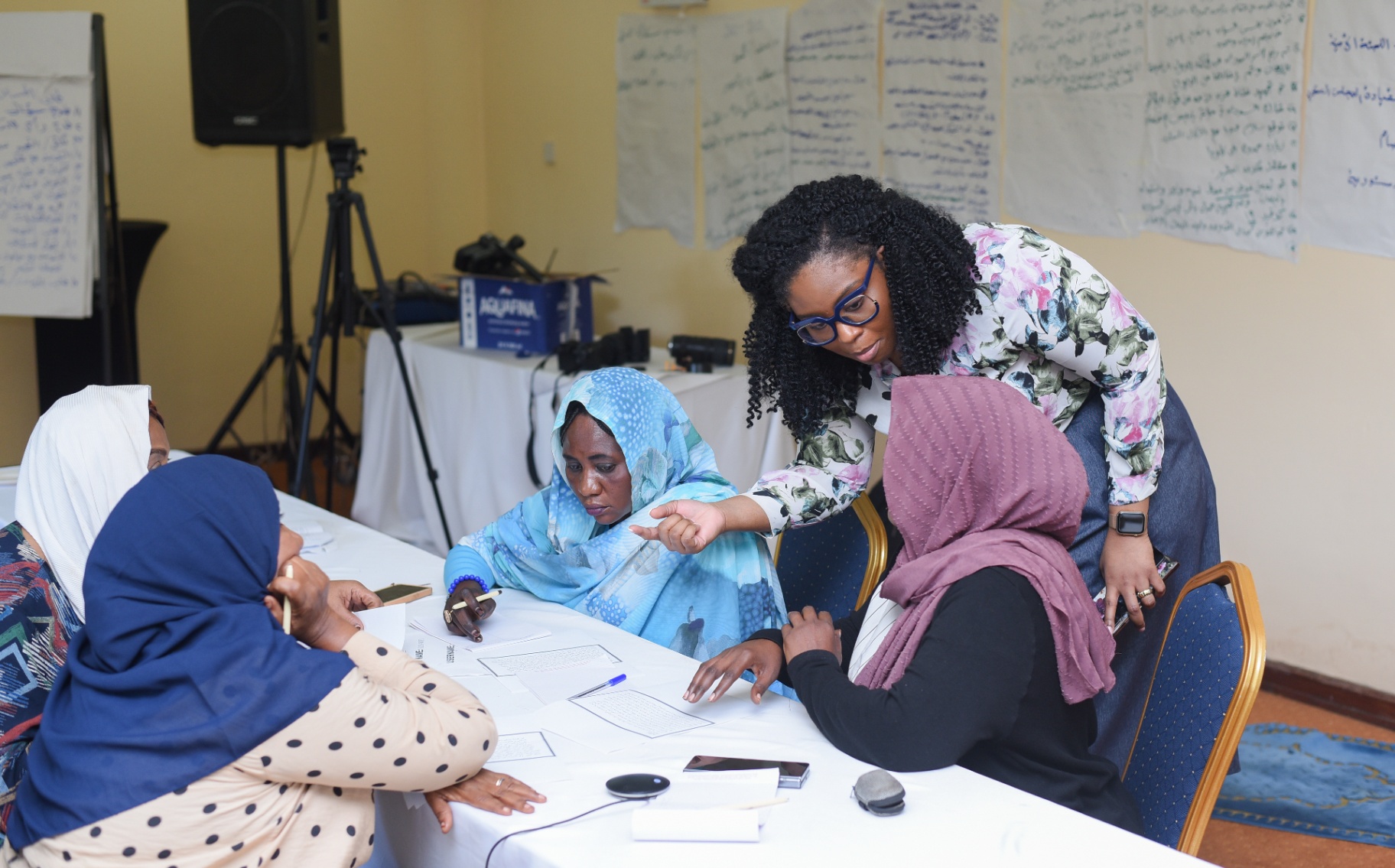
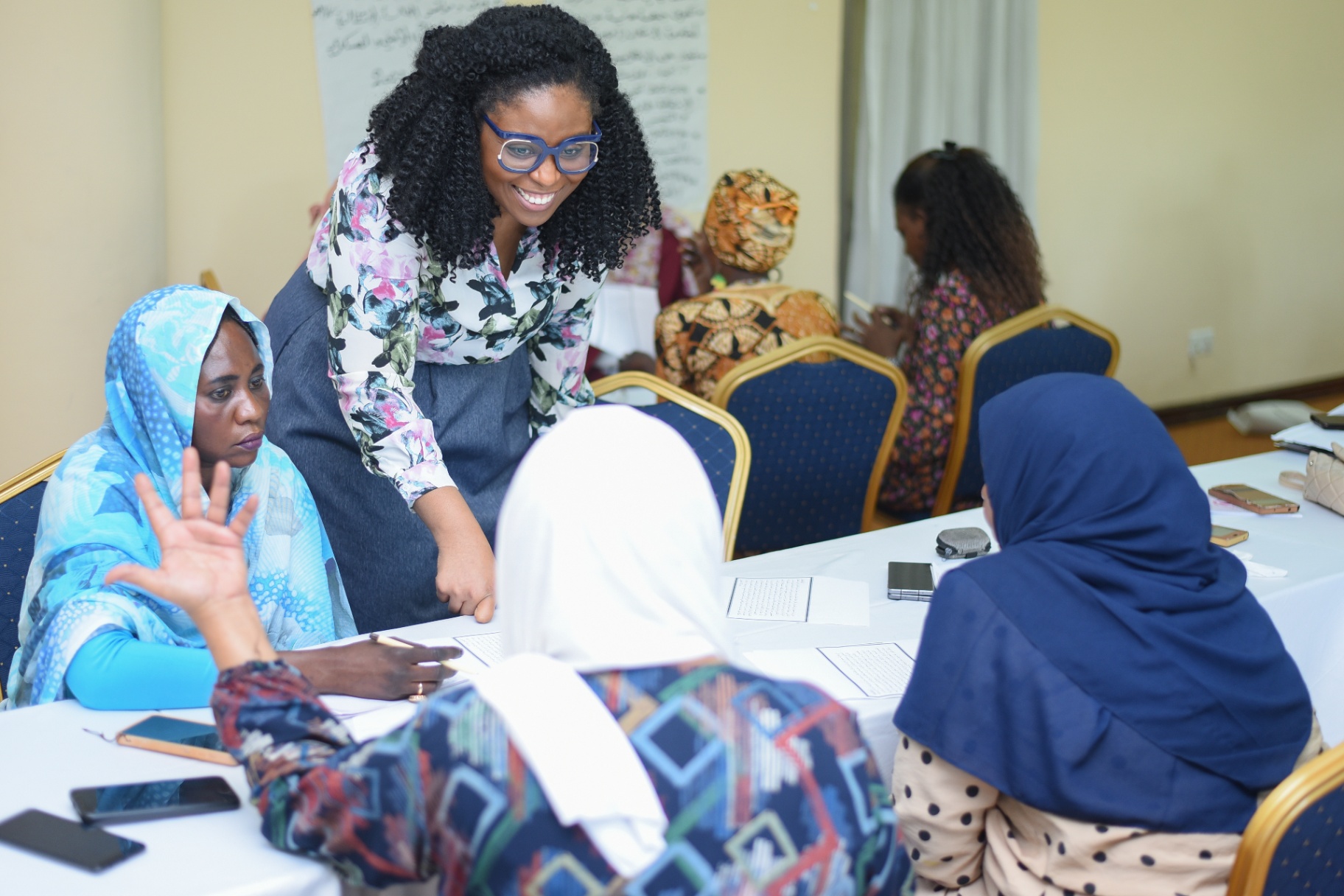
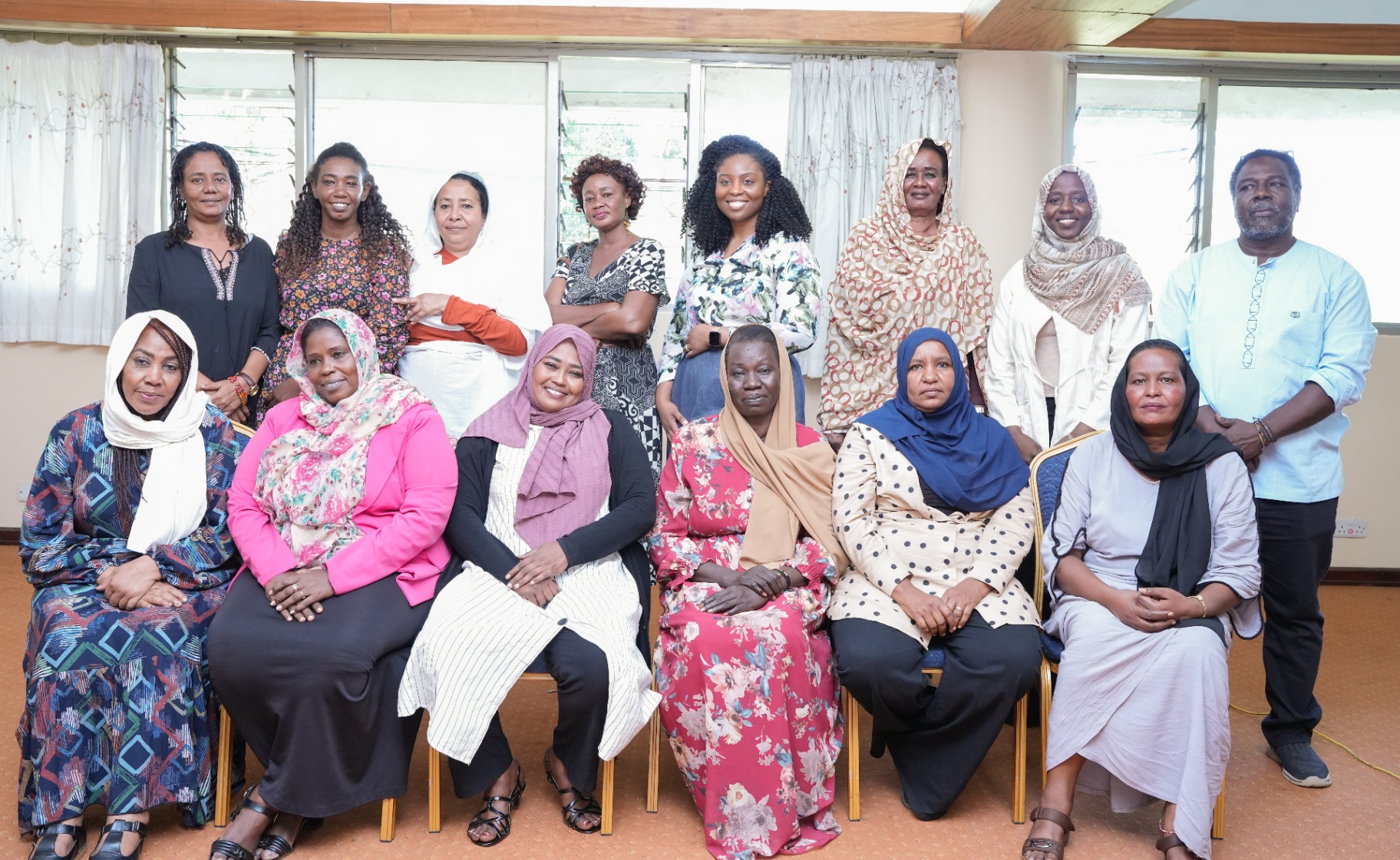
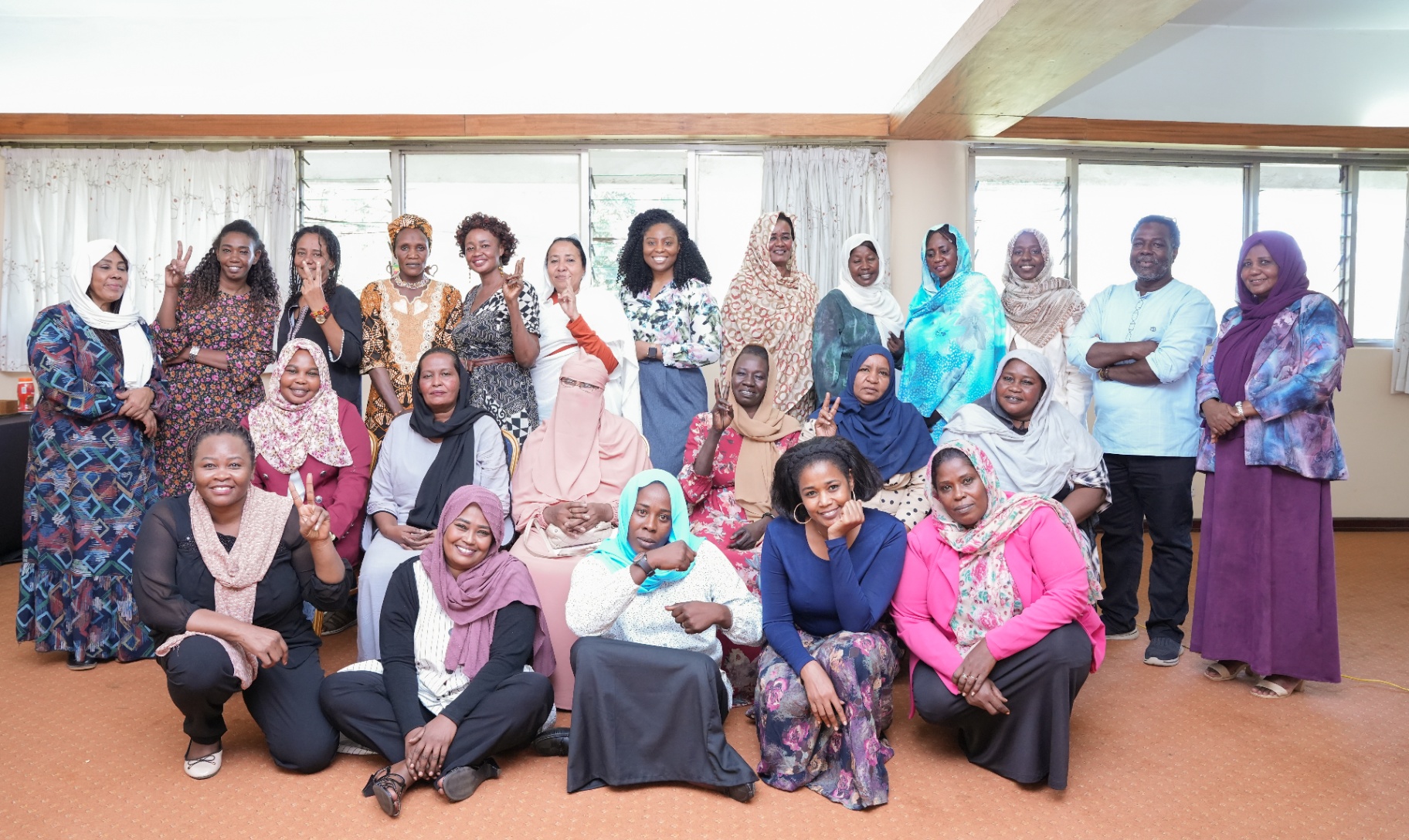
A global environmental nonprofit brought Love in to anchor its annual development retreat — 130 staff across organizational levels, in a year of significant institutional change.
Participants reported her session generated more growth than any other element of the retreat. The conversations it surfaced ran through every session that followed — and through the organization's work in the weeks preceding the retreat.
The organization signed a follow-on engagement before the retreat ended. What they took with them wasn't a report — it was a protocol built from their own room, in their own language, that they kept running themselves.
"Their facilitation is grounded in psychological safety, behavioral change, conflict transformation, and inclusive leadership practice. They are particularly effective at creating spaces where participants can reflect honestly, engage across difference, and translate insight into concrete action."
Senior Manager, Organizational Effectiveness & Culture — global environmental nonprofit
Two different rooms. Two different tensions. The same underlying work: closing the gap between what people feel and what the organization can actually execute on.
In practice — when the gap is between functions
Two days. One paradox named. A framework that outlasted the room.
A global mission-driven foundation brought Love and a co-facilitator in to work with its senior technical and programmatic leadership — two functions that respected each other and still couldn't build shared standards.
The friction wasn't about culture in the soft sense. It was epistemic: a scientist and a communications lead have different definitions of rigor, evidence, and "done." An operations director and a program lead have different relationships with risk, timelines, and accountability. Everyone was competent. Everyone was well-intentioned. Decisions still didn't hold.
Over two days, the group named the specific behaviors they were leaving behind — not vague culture language, but concrete patterns: information silos, side deals, territorialism dressed up as protecting one's domain. They replaced them with explicit agreed norms and left with three prioritized strategic clusters and a shared operating framework neither function could have built alone.
"This was the first time in years our technical and programmatic leads walked out of a room with the same definition of 'done.'"
Senior leader · global mission-driven foundation
So you can picture it — and sell it internally
What a session actually looks like
Every engagement is built from what actually happens in your room — not a template dropped on you afterward. Here's the structure that makes that possible.
01 — Pre-session
Brief & diagnostic
A 15–30 minute call to understand context, name the specific tensions, and design the facilitation sequence. I do the heavy lifting before I arrive. Total time cost to your team before the session: one call.
02 — Opening
Name the tension, not solve it
A short framing that names what's in the room — the real thing, not the polite version. This is where the session earns the trust it needs for what comes next.
03 — In the room
Structured small groups, then large
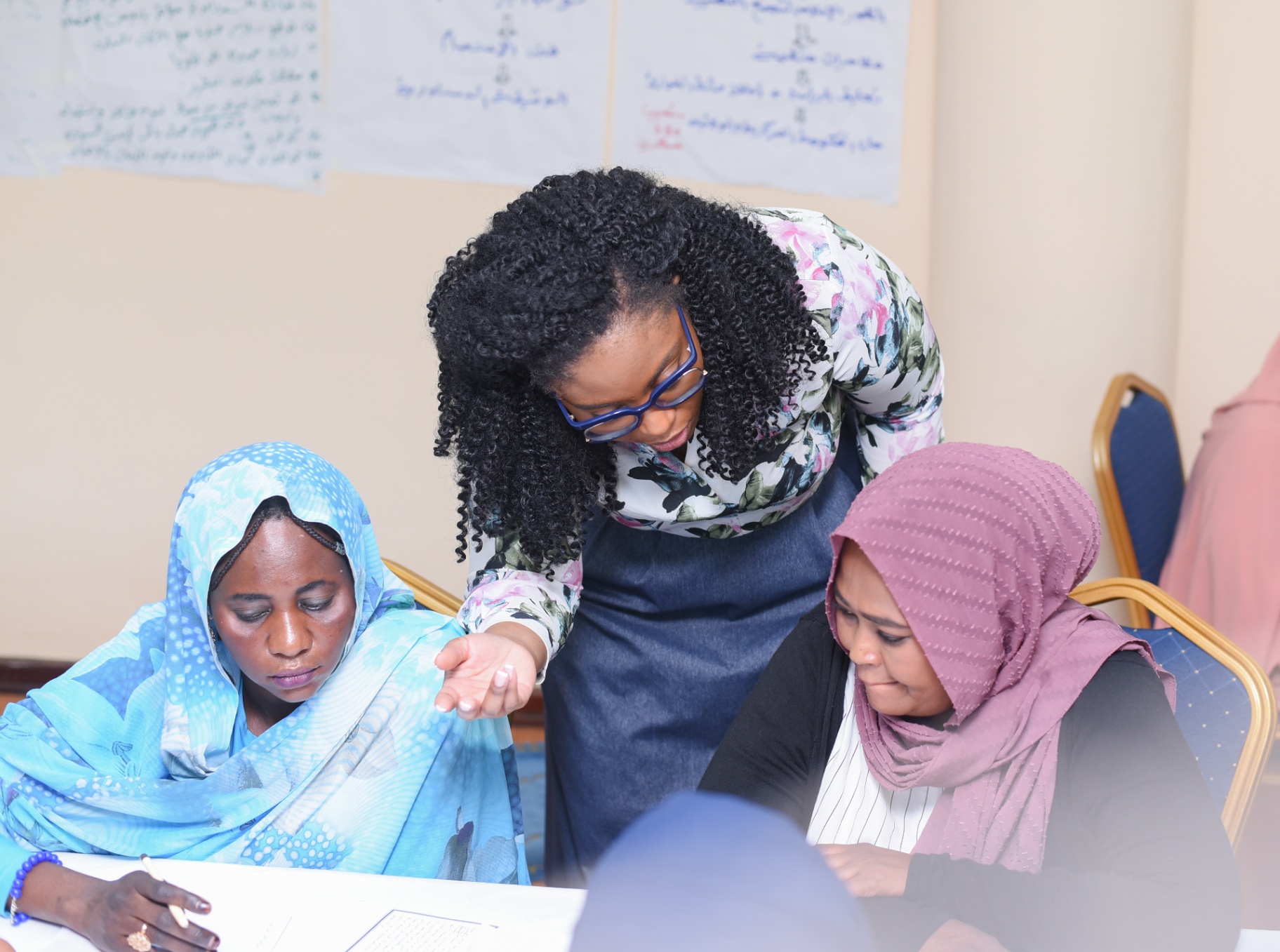
Mixed breakout groups (by function and level) work through a prompt built from the pre-session brief. The room reconvenes for a facilitated large-group moment where themes are surfaced and named out loud, often for the first time. Virtual sessions use breakout rooms and shared digital boards — the format changes, the discipline that gets people past performance doesn't.
04 — Leave-behind
Built from your room
The session closes by building the start/stop/invite protocol live, in your team's own language. Not a template. An artifact distilled from what actually happened — customized to your team's named commitments, so they can run it themselves without me.
The record behind both kinds of rooms
17 years. Tested at the highest levels of institutional complexity.
This isn't a methodology developed for one kind of organization or one kind of problem. It's been pressure-tested in active humanitarian field contexts, inside the UN system, in global philanthropy, and at some of the most politically complex organizations in the world.

Cornell University — Associate Dean, Conflict Transformation Services
Designed and implemented a university-wide conflict resolution and governance system for 20,000+ students, faculty, and staff. Contributed to an 80% reduction in formal grievance escalation — by building structural early-intervention pathways that addressed conflict before it required institutional machinery. This is the same structural model the Clarity Engine is built on.

Bill & Melinda Gates Foundation — Multi-year, $1.4M engagement
Emotional intelligence, inclusion, and psychological safety programs for leadership teams. In-person retreats across 4 countries. Culture advisory for the DEI & Culture Center of Excellence. Executive coaching through organizational transition.
"Unsiloed demonstrated professionalism, responsiveness, discretion, and a deep commitment to quality. Their approach combined strategic insight, skilled facilitation, cultural fluency, and human-centered care." — Former Director / Chief of Staff, Gates Foundation

UNOPS — Active UN procurement agreement
Signed Blanket Purchase Agreement (July 2025) for instructor-led training across 6,000+ personnel globally. Contract ceiling $250,000 with 12-month renewal. Full compliance with UN General Conditions of Contract and KPI-governed delivery. Currently active and performing.

Global ad-tech firm — 548 employees, 14 offices, $330K multi-year
Inclusive leadership programs, culture transformation assessments, and psychologically safe conversation facilitation across 14 global offices.
"I feel very comfortable as a senior member of this organization handing the reins over to Love because I trust her with our employee experience, with our culture, and with our company." — SVP HR

Search for Common Ground — Uganda & South Sudan
Conflict resolution, mediation, and inclusion facilitation in active humanitarian field contexts. The same methodology that holds in a boardroom holds where the stakes are existential.
How to work together
Three engagements. One engine. Minimal lift on your side.
Every engagement follows the same promise: one short pre-session call, I do the heavy lifting before I arrive, and what your team leaves with is built from what actually happened in your room — not a template handed to them from mine.
Before the offsite
Virtual Leadership Working Session
90 MIN · VIRTUAL · TEAM OF 8–30
A pre-retreat diagnostic that surfaces what your team won't say in the room — so the offsite ends in decisions instead of alignment that evaporates by Monday. Built for the team that's stretched, has been through leadership changes, and needs to reset before the next big moment.
What you leave with: named unsaid things, the start/stop/invite protocol in your language, and a facilitator brief for whoever runs the offsite.
Explore this engagement →At the offsite
Retreat Session
HALF-DAY · IN PERSON · UP TO 150 STAFF
The session that shifts the candor of the room and leaves your team the Clarity Engine — a working protocol built from what actually happened, in their own language. The Environmental Defense Fund format. What it replaces: a retreat facilitator whose energy faded by Friday, at a comparable fee, with none of the architecture.
What you leave with: resolved questions, surfaced concerns, committed next steps, and a protocol that runs without me.
Explore this engagement →Leadership Decision Room
Executive or Board Session
FULL DAY · VIRTUAL OR IN PERSON · EXECUTIVE TEAM OR BOARD
For teams navigating a hard decision, restructure, or friction between functions that respect each other and still can't agree. Pre-session stakeholder interviews. Designed facilitation sequence. Produces a decision — not a debrief. What it replaces: two more quarters of deferral, and the consultants you'd eventually hire to tell you what your team already knows.
What you leave with: resolved questions, a documented decision log, and a candor protocol for the conversations the decision will generate.
Explore this engagement →Investment is scoped to your team's size and complexity — single team or team of teams — and shared in a proposal after a fit conversation.
A candid filter, because your time is the expensive part
This is a fit if. It isn't if.
This is a fit
Nothing is broken. Something just isn't working as well as it should, and no one can say why.
Leadership has changed hands more than once recently. The team is stretched. An engagement number came back lower than anyone expected — not because anyone failed, but because everyone's been doing their best through a genuine perfect storm.
Two good teams — technical and programmatic, expert and non-expert — respect each other and still can't build shared standards.
A retreat, transition, or major decision is on the calendar and you need the room to actually produce something.
You're willing to be in the room. This works on leadership, not around it.
You've run a psych-safety workshop before and it didn't hold. That's not a sign this won't work — it's a sign the workshop was the wrong tool. This one is structural, not educational.
This is not a fit
You need a keynote to fill a slot on an agenda.
You want a culture initiative that doesn't touch the executive team or change how leadership operates.
You're looking for validation of a decision that's already been made.
The goal is the appearance of listening rather than the consequences of it.
I'll tell you this on the first call if I see it — it saves us both the quarter.
The risk sits with me,
where it belongs.
The fit-first commitment
If the pre-session brief shows I'm not right for your situation, I'll tell you before you've paid anything — and point you to someone who is. I decline engagements every month. Yours would not be the first.
The surface guarantee
If by the midpoint of the session we haven't surfaced anything your leadership team didn't already have on the table, we stop — and you don't pay the remaining balance. In 17 years across 30 countries, I have offered this every time. I keep offering it because the methodology is why.
What participants say
"Love gave us a new language and mental models for how we work together. The session made it safe to say what we'd been thinking for months."

Retreat participant · global environmental nonprofit
"She influenced the conversations we were having throughout the entire week — and shaped the work we were doing leading up to the retreat. That kind of reach is rare."

Retreat participant · global environmental nonprofit
"For the first time, I felt comfortable being honest about where things weren't working. Not performing culture — actually talking about it."
Retreat participant · global environmental nonprofit
"Unsiloed's audit of our structure and roadmap of recommendations helped us produce a baseline and framework for making our company a more inclusive place."

HR Business Partner · global company
"The framework we built in those two days is the one our leadership still runs its hardest conversations through."

Cross-functional leader · global foundation
"Working with Love was the most useful engagement we ran that year — measurable, humane, and specific to our organization."

Program director · long-term client
About Love
Lawyer. Mediator.
Executive Coach.
PhD Researcher.
Love Odih Kumuyi has spent 17 years doing one thing: building the empathy that lets people say what's true, and the accountability that turns it into action. She is trained as a lawyer (University of London), certified as a mediator, credentialed as an executive coach, Adjunct Professor at New York University, and a former Associate Dean at Cornell University.
Her institutional record spans the UN system (UNOPS, UNDP, WHO), global philanthropy (Gates Foundation, EDF, Open Society Foundations), multinational companies (Google, Sony, PubMatic), and the U.S. public sector (U.S. Peace Corps, Cornell, Arizona State University) — across more than 30 countries.
The organizations she does her deepest work with didn't start by having a crisis. They started by having a conversation. The Clarity Engine is what that conversation makes possible — not as a one-time intervention, but as a structural upgrade that compounds over time.
For engagements beyond a single leadership team, Love draws on a vetted bench of co-facilitators, coaches, and assessment specialists she has worked with for years — so scale never means a stranger runs your room.
A practice of Unsiloed · New York, USA · loveodihkumuyi.com
The organizations I do my deepest work with didn't start by having a crisis. They started by having a conversation.
The conversation your organization needs has a cost either way. One version costs a form and thirty minutes.
Two questions. If there's a fit, I respond within 48 hours to schedule a free 30-minute strategic conversation — useful whether or not we ever work together: you'll leave with the three questions your next offsite has to resolve. That first conversation is just that: a conversation. No proposal, no obligation, no pitch.